Returning to Kathmandu
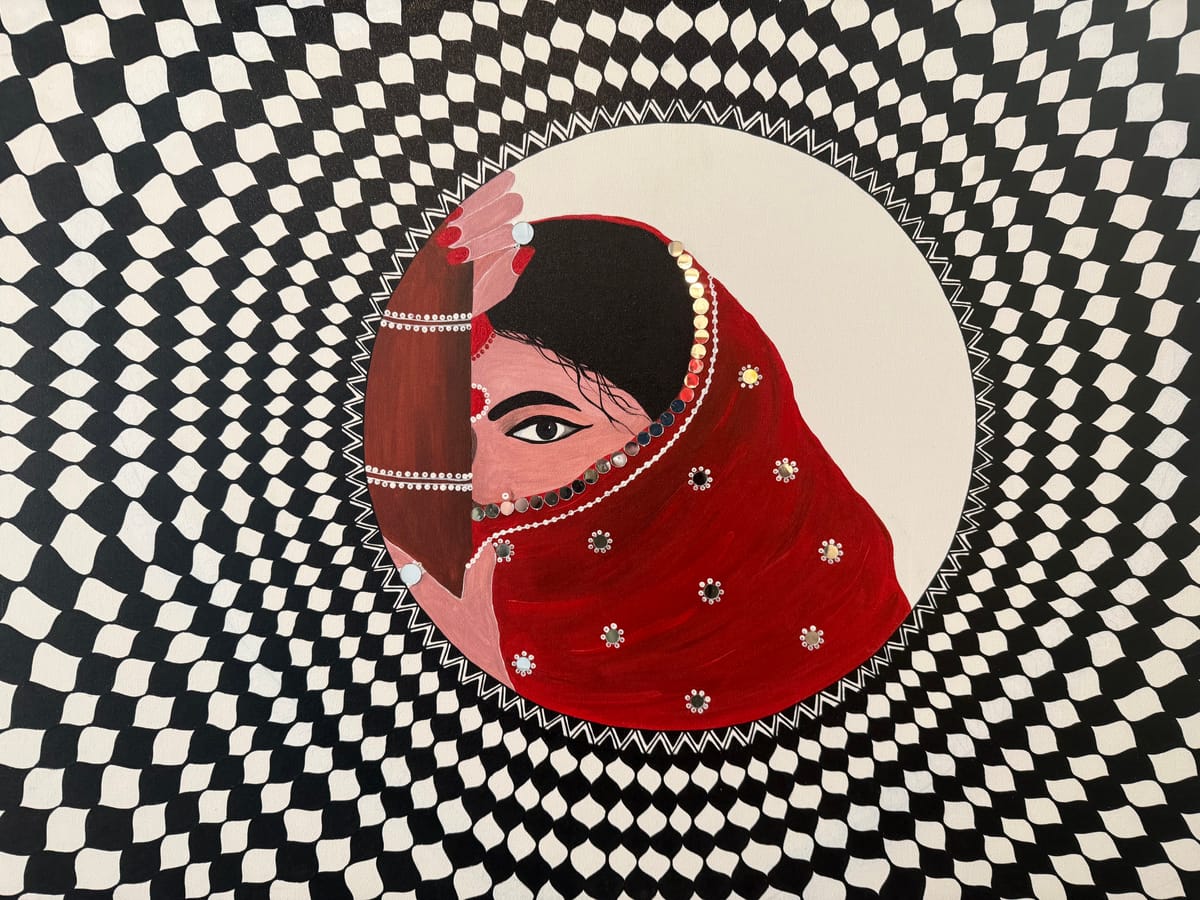
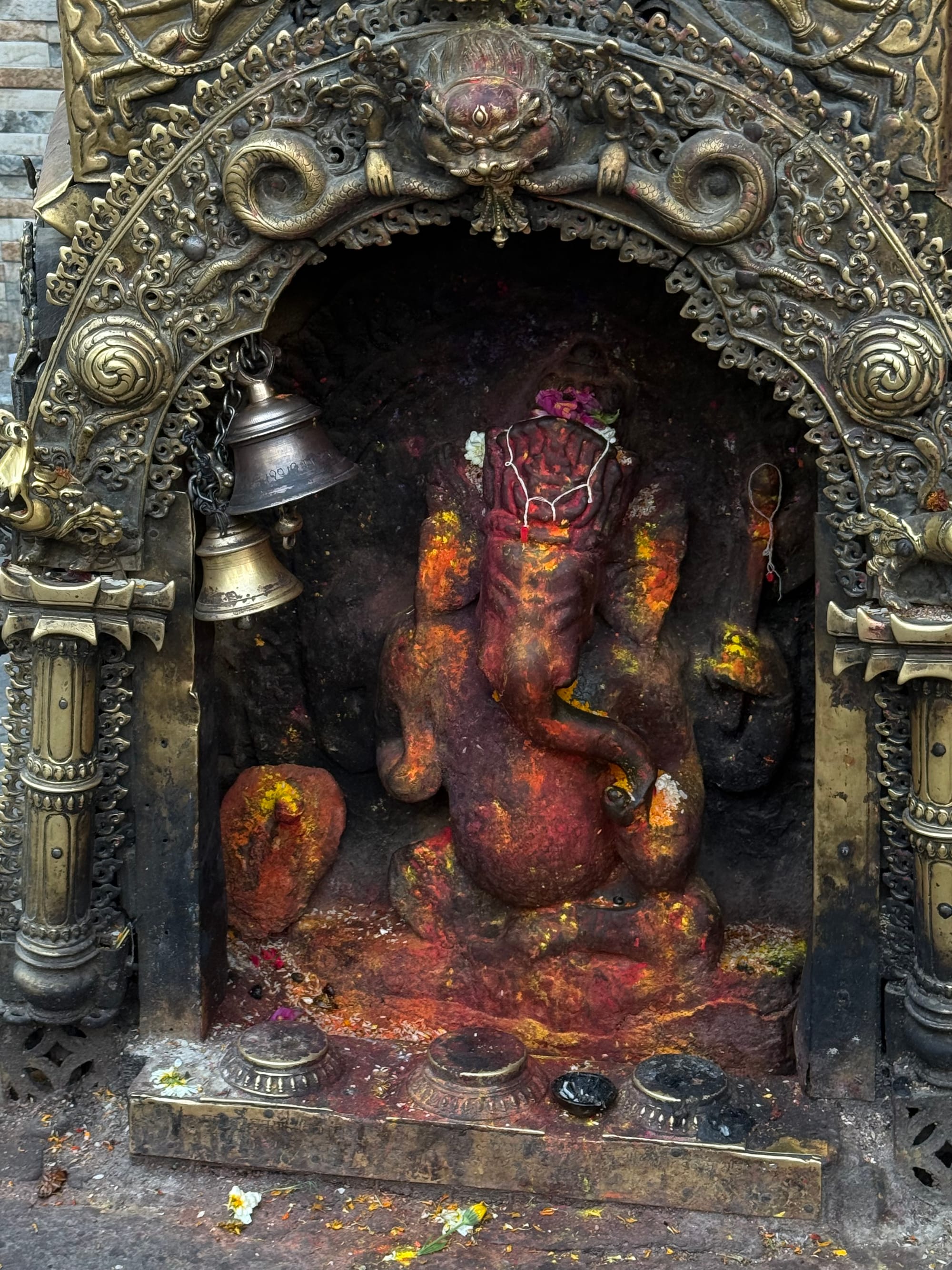
The last time I was in Kathmandu was 16 years ago.
My return was far from seamless. A fall left my ribs bruised, and a persistent cough made every movement—especially every cough—sharp and painful.
I had planned to stay with my Nepali friend Ratna, but quickly realized that, given my condition—and perhaps also age and the accumulation of past surgeries—I could no longer move as easily within a traditional Nepali home. Navigating stairs to reach a shower or toilet, often designed in a squat style rather than the pedestal form I’m used to, became difficult. I chose instead to move to a hotel.
This was my first shock: what I once adapted to with ease now felt like a genuine limitation.
Once settled, I stepped out with a simple curiosity—what has changed, and what has remained?
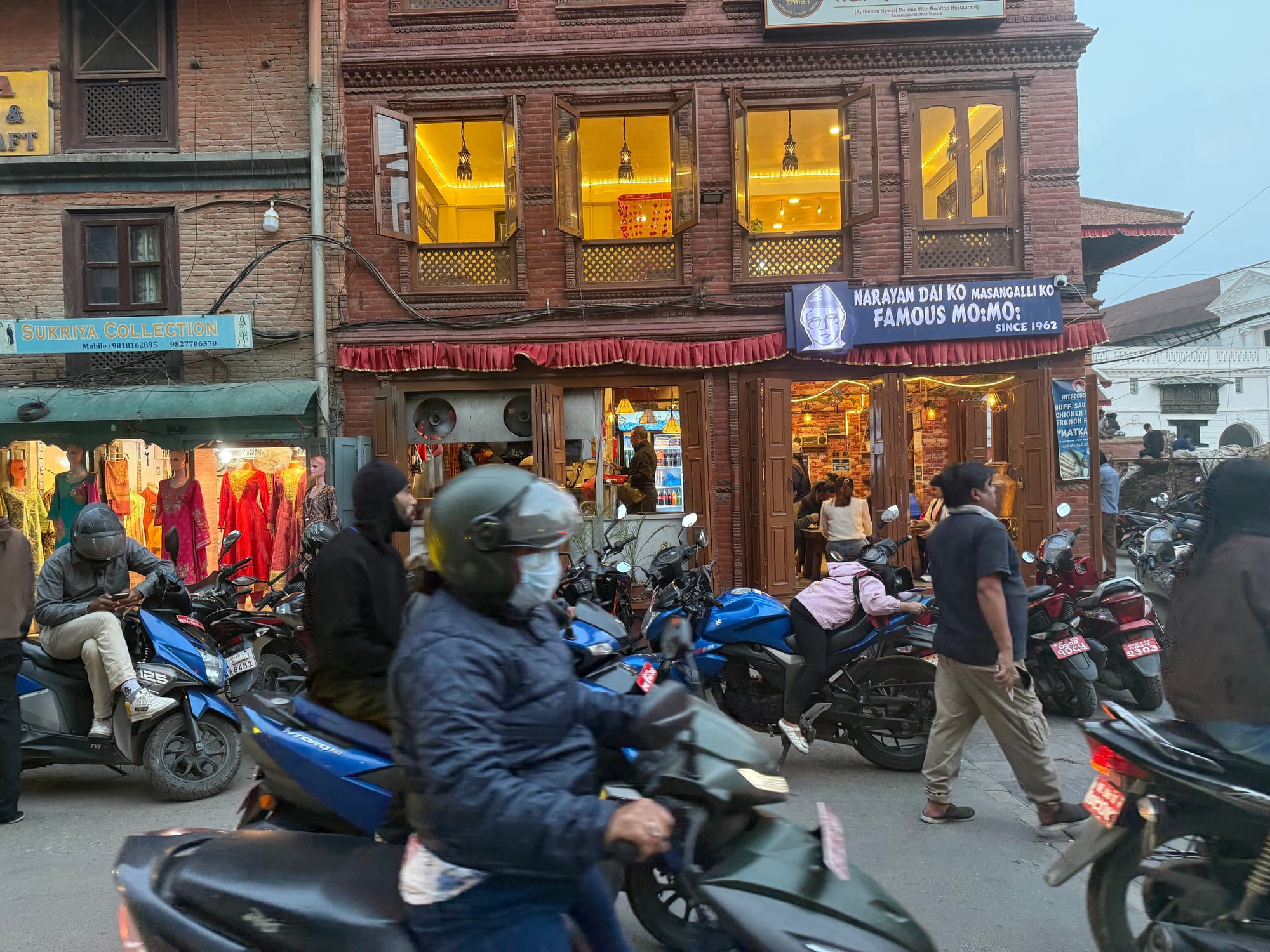
Walking through Thamel, I was immediately struck by the volume of motorcycle traffic. Much of the time you share the street with it; sidewalks are minimal or nonexistent. Kathmandu is still walkable, but it now asks for a heightened vigilance I don’t recall from earlier visits.
And yet, much remains.
There is still an aliveness—slightly chaotic, but not disordered. Street shrines appear without announcement. Devotion is woven into the everyday. There is a hospitality that feels understated but genuine—a relational pace where people engage, not just transact.
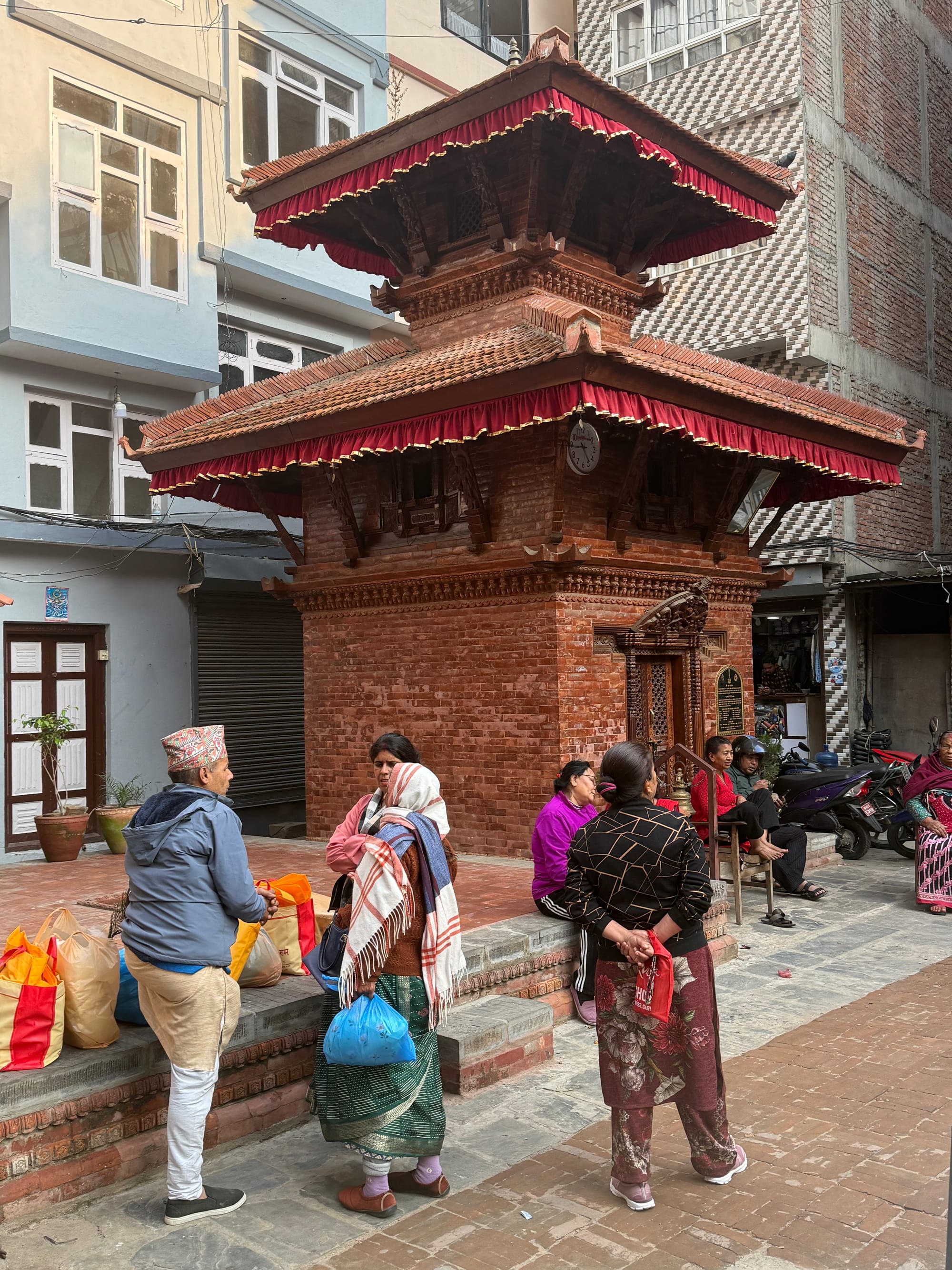
All of this now coexists with a more globalized layer: boutique hotels, yoga studios, trekking agencies with polished branding. WiFi is everywhere. Mobile phones are ubiquitous. Many move through the streets while simultaneously absorbed in another, digital landscape.
Against this backdrop, two encounters stood out.
I visited a small gallery with artists in residence. One invited me to look at his work—highly detailed, rooted in traditional Newari forms, yet reaching beyond them. There was a probing quality, as if something was pressing against inherited constraints.
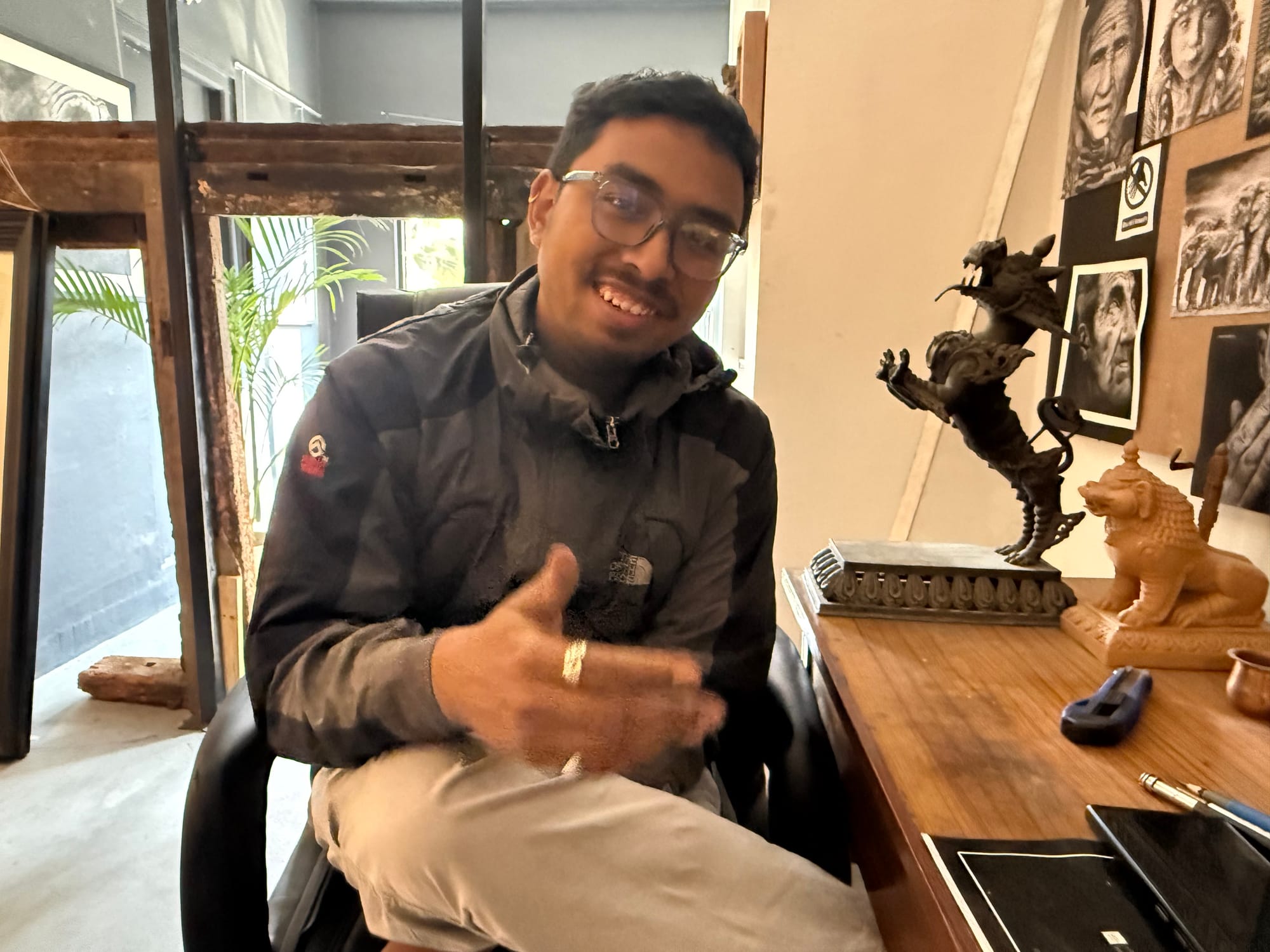
I asked him a simple question: “What is your art about?”
He paused—almost startled—then said no one had ever asked him that before.
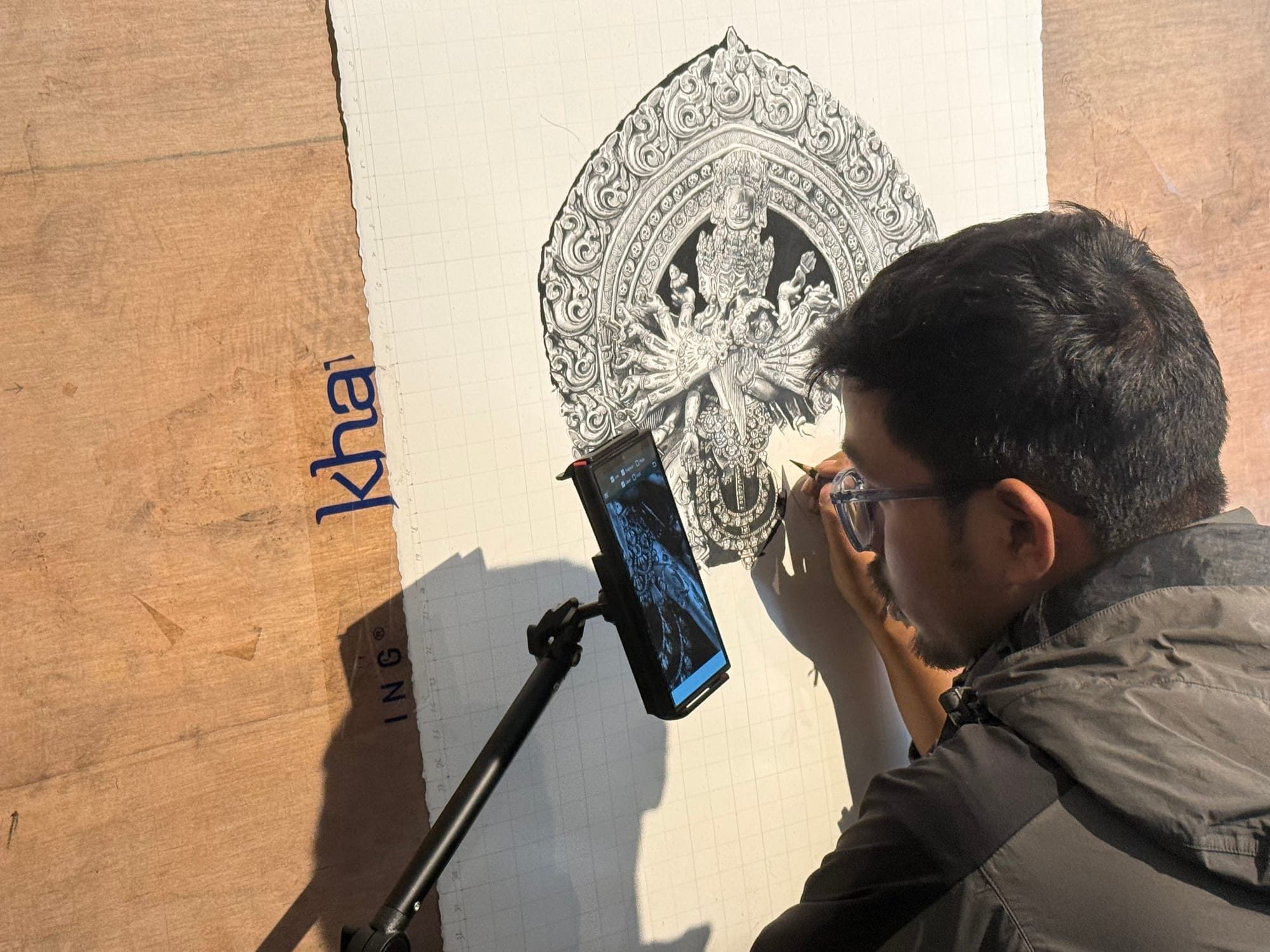
What followed was not a presentation, but a dialogue. We spoke about creating, seeing, being human, and our relationship to the divine. We found ourselves comparing ways of experiencing rather than explaining them. As we parted, he said the conversation felt expansive and enlivening.
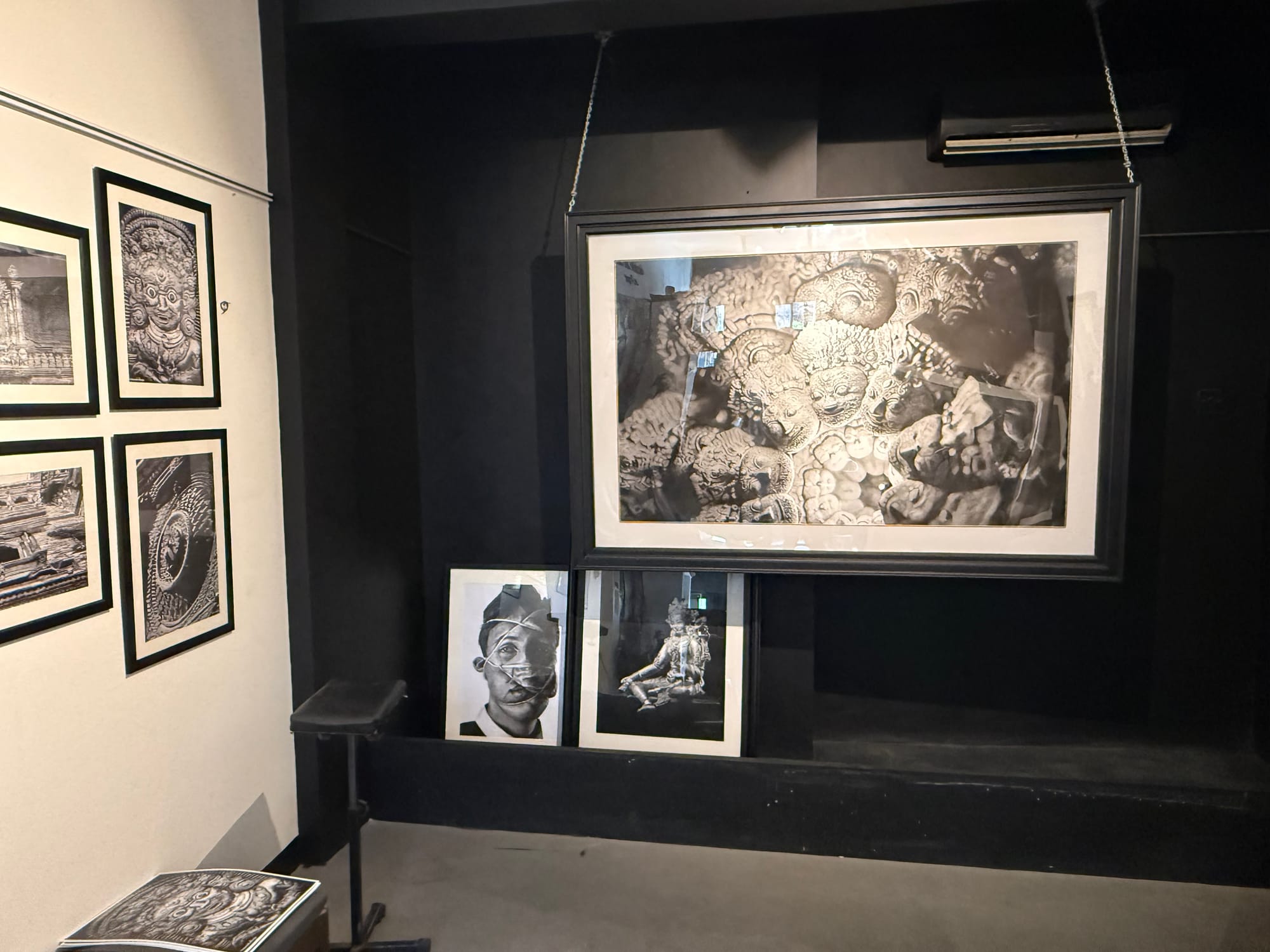
I felt the same.
Later, walking toward Durbar Square, I was approached by a man on the street. From the start there was a familiar sense of being drawn into something—a pattern I’ve encountered often in highly touristed places. Usually I would decline quickly. This time, I stayed.
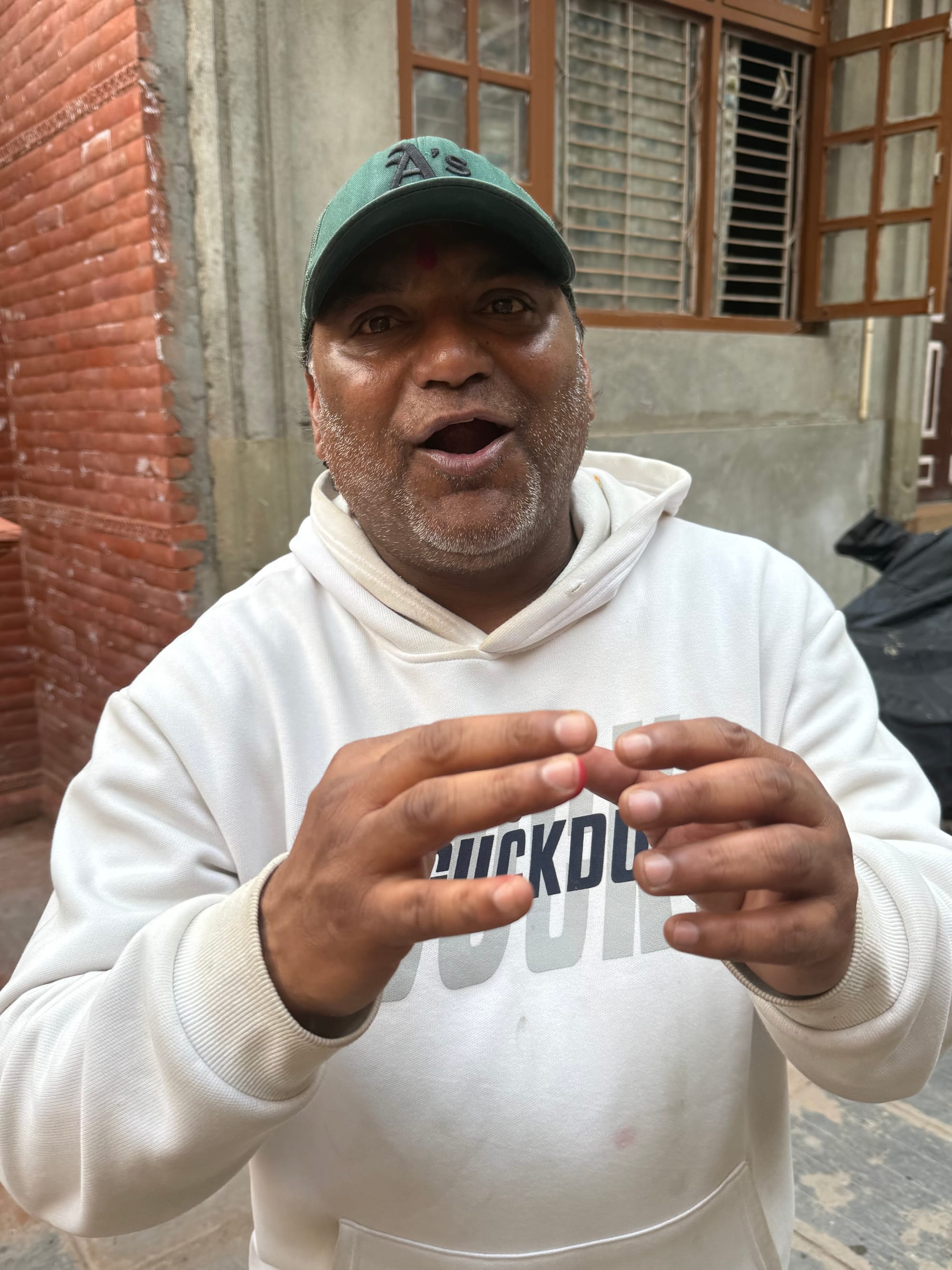
At first, the exchange was easy. We spoke about politics—Nepal and the U.S.—then about his appreciation for Buddhism despite being Hindu. He shared his experience of the earthquake: losing his home, fearing for his family, and the breakdown of trust as people competed for resources.
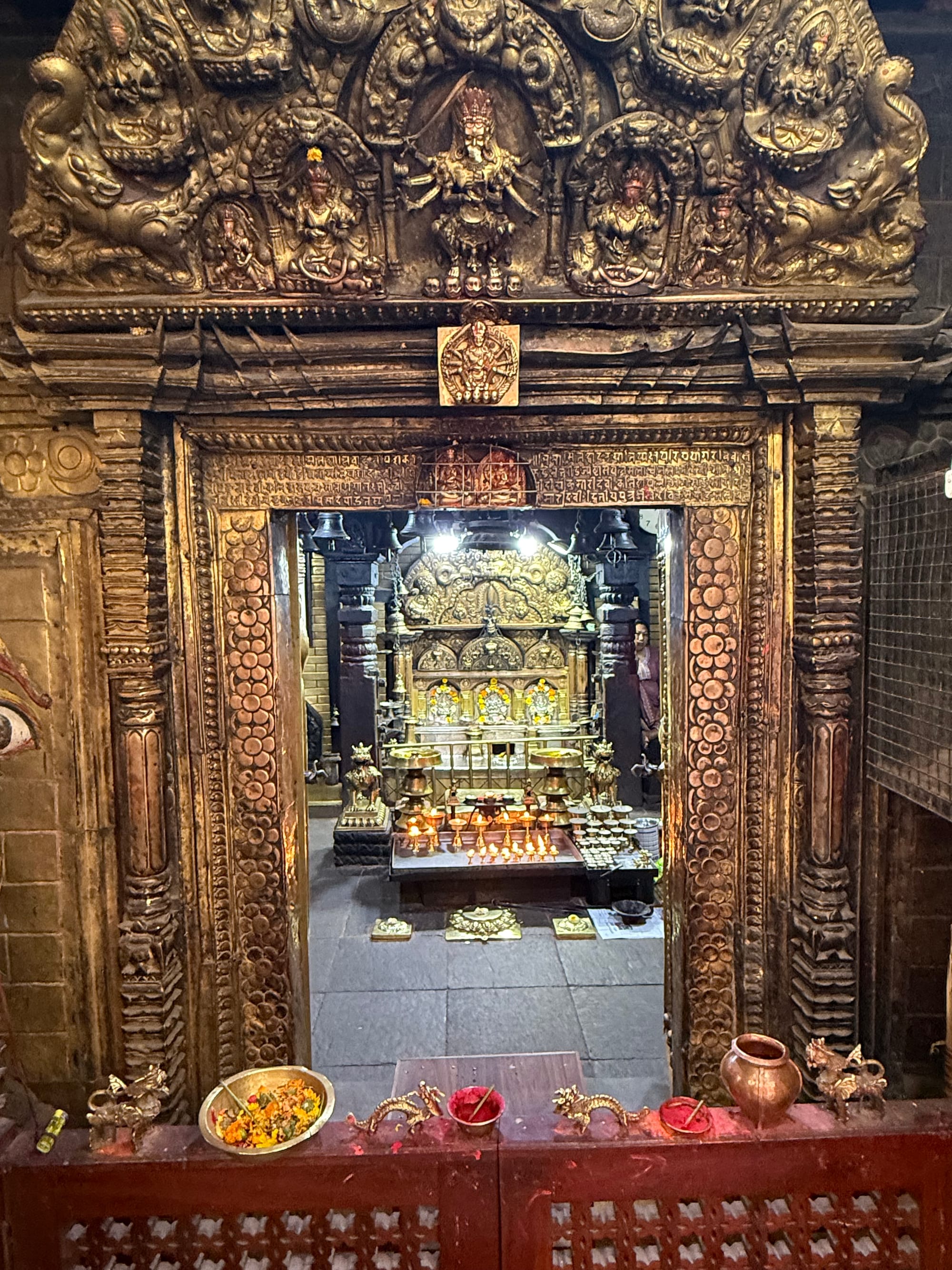
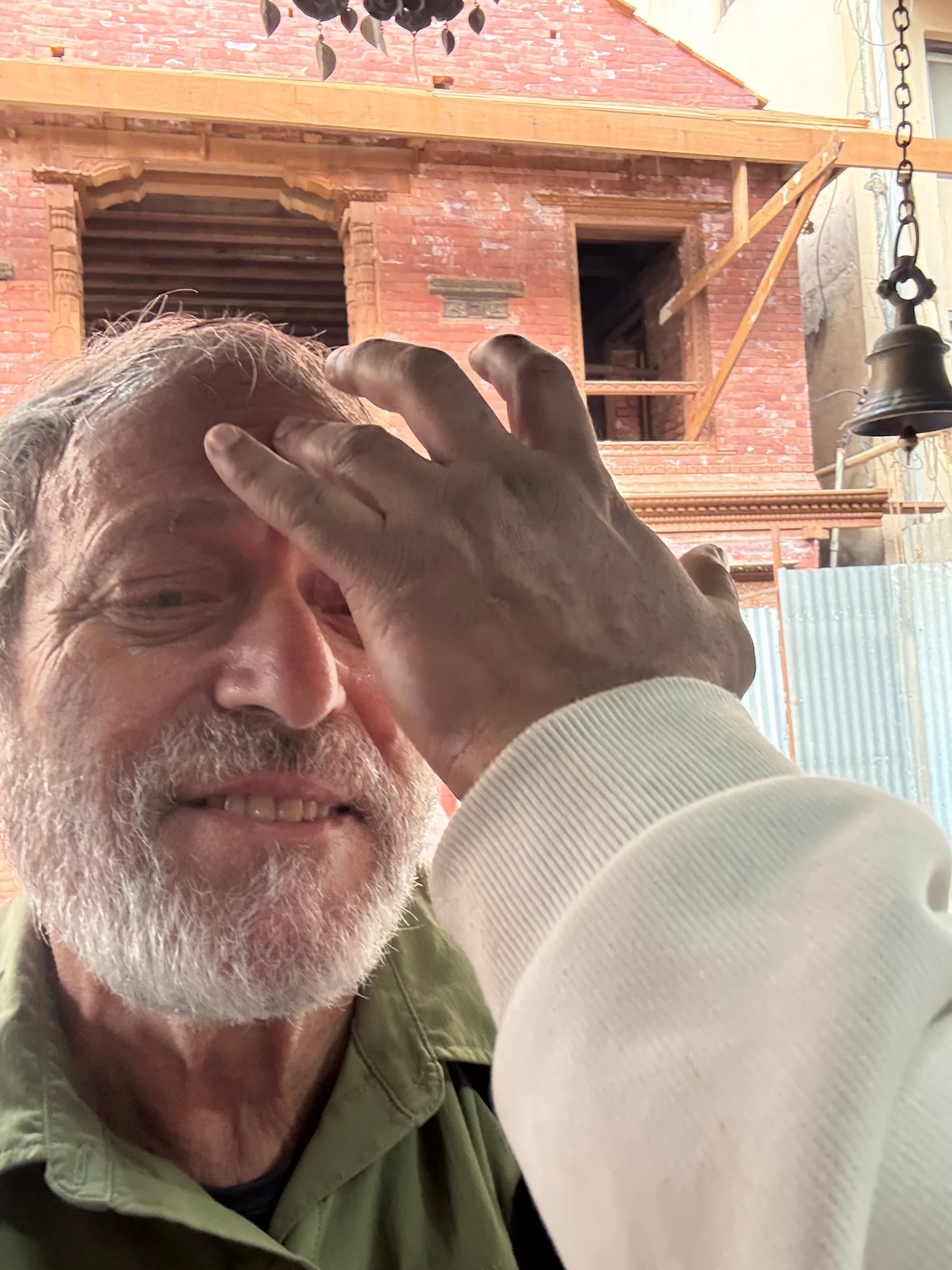
At one point he led me to a small shrine, blessed himself, and then marked my forehead with vermillion and petals. It was awkward, and also touching—a quiet kind of re-entry.
Gradually, the tone shifted.
He brought me to a building, then to a room filled with thangkas. Another man appeared. What followed was familiar: a stream of explanations, rehearsed and repeated, largely indifferent to what I shared of my own background. I tried to meet them in dialogue; they remained in script.
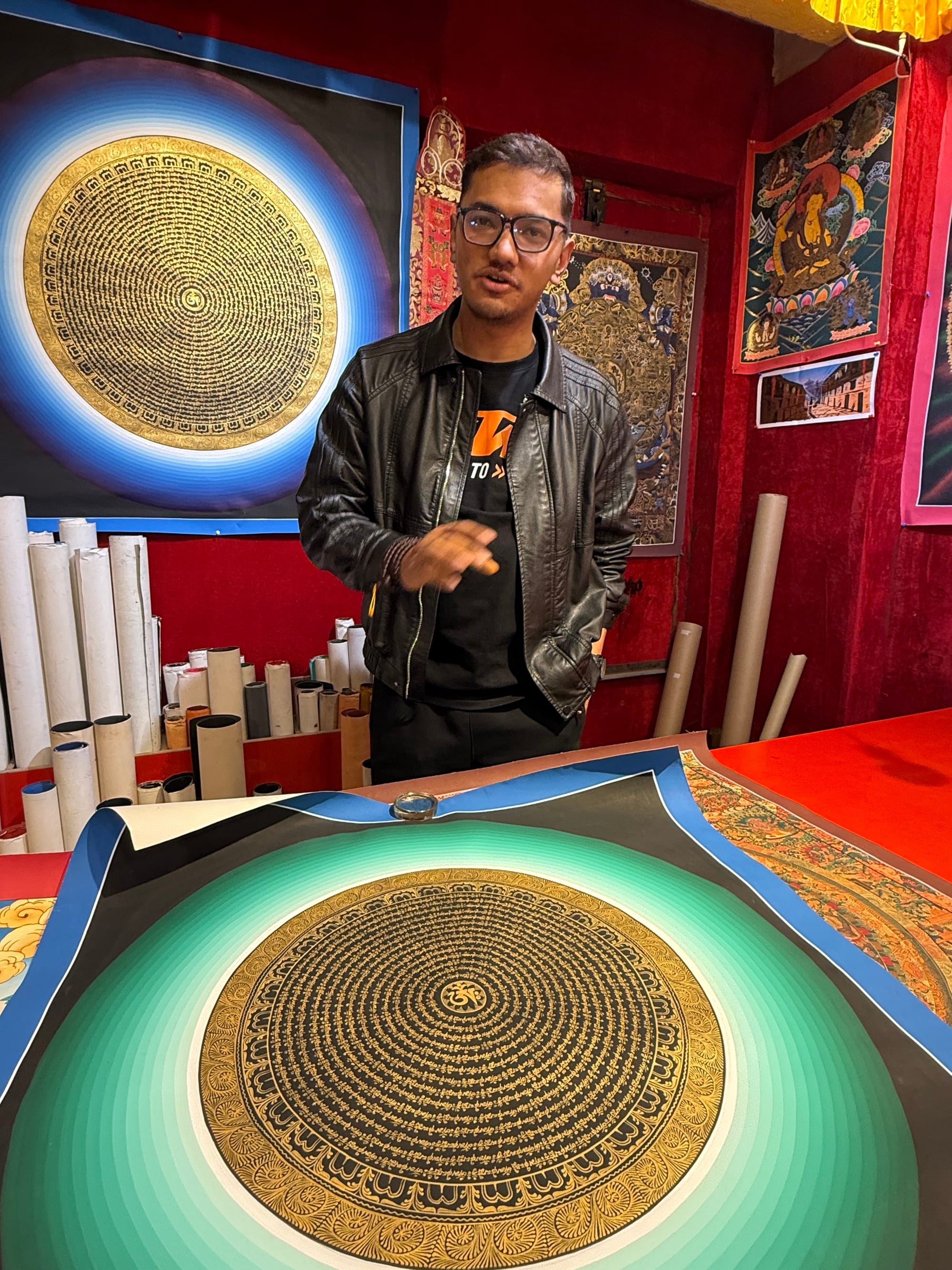
It became, in a way, a sparring match.
I made it clear I wasn’t there to buy. Still, the pitch continued.
When we finally parted, he asked for money “for his family.” I told him honestly that the way it was asked didn’t sit well with me. Still, I gave a small amount. We said goodbye, and I continued on.
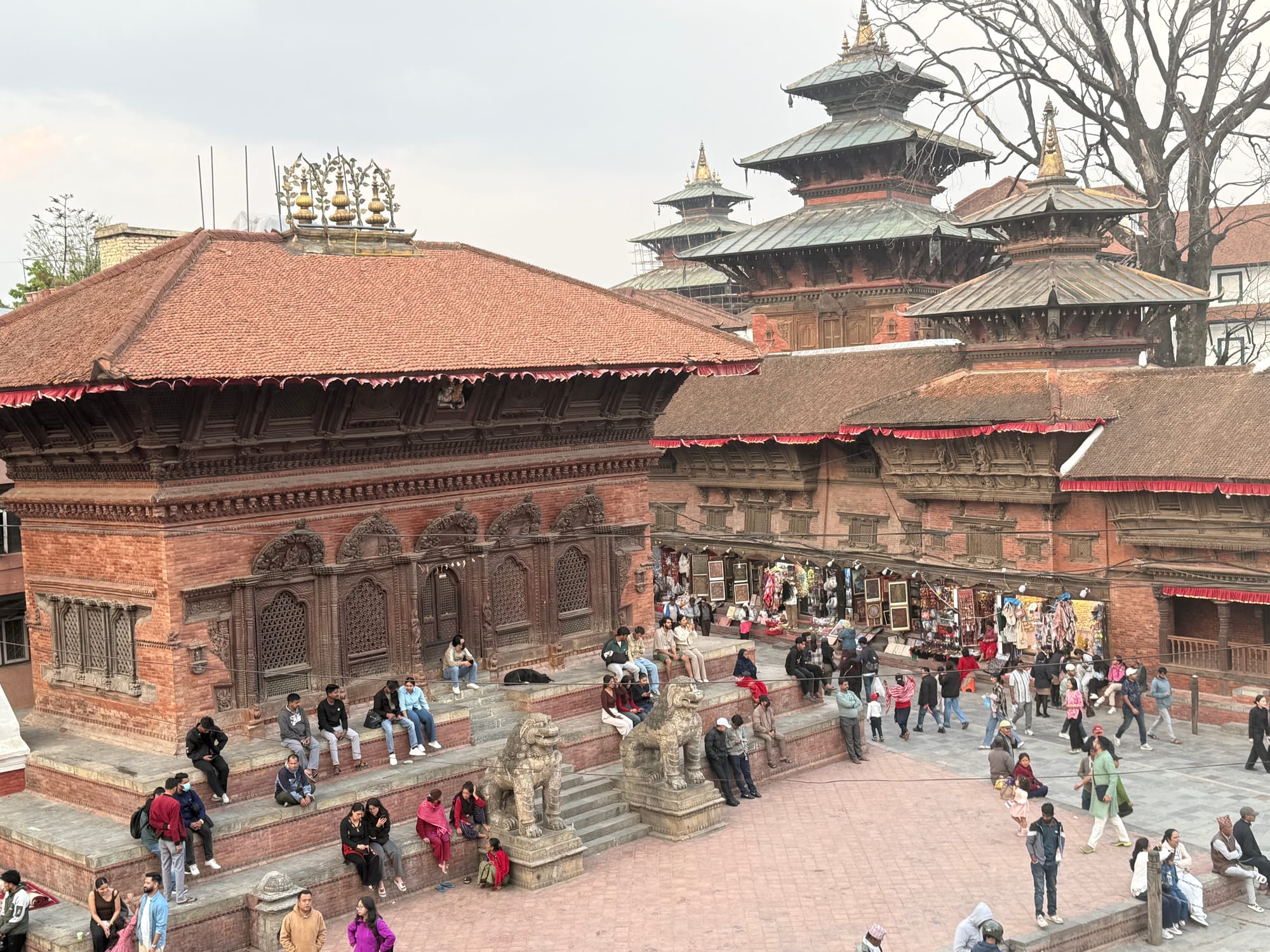
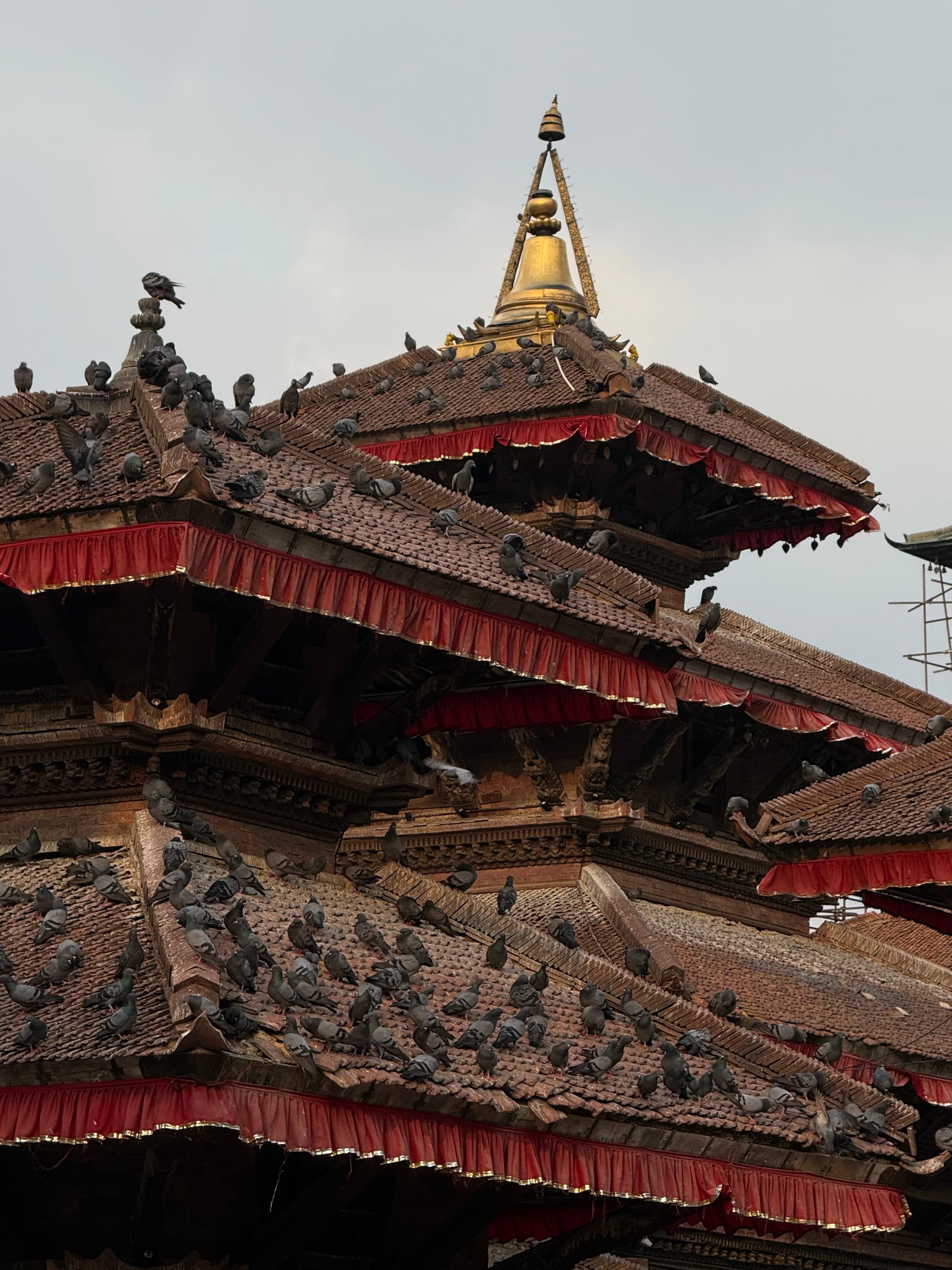
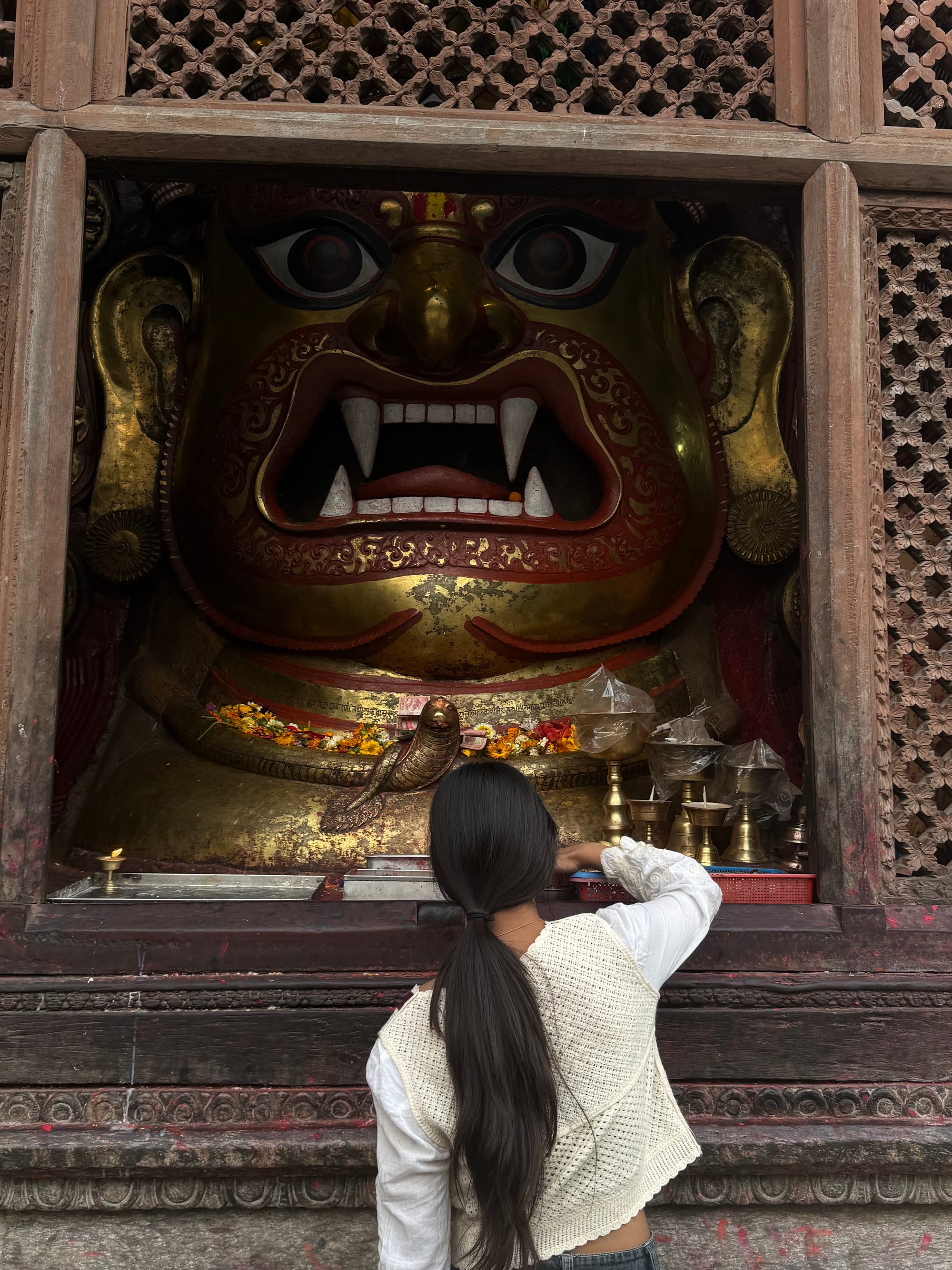
At Durbar Square, I stood as evening settled. Worship continued. The shapes of the temples slowly returned to memory.
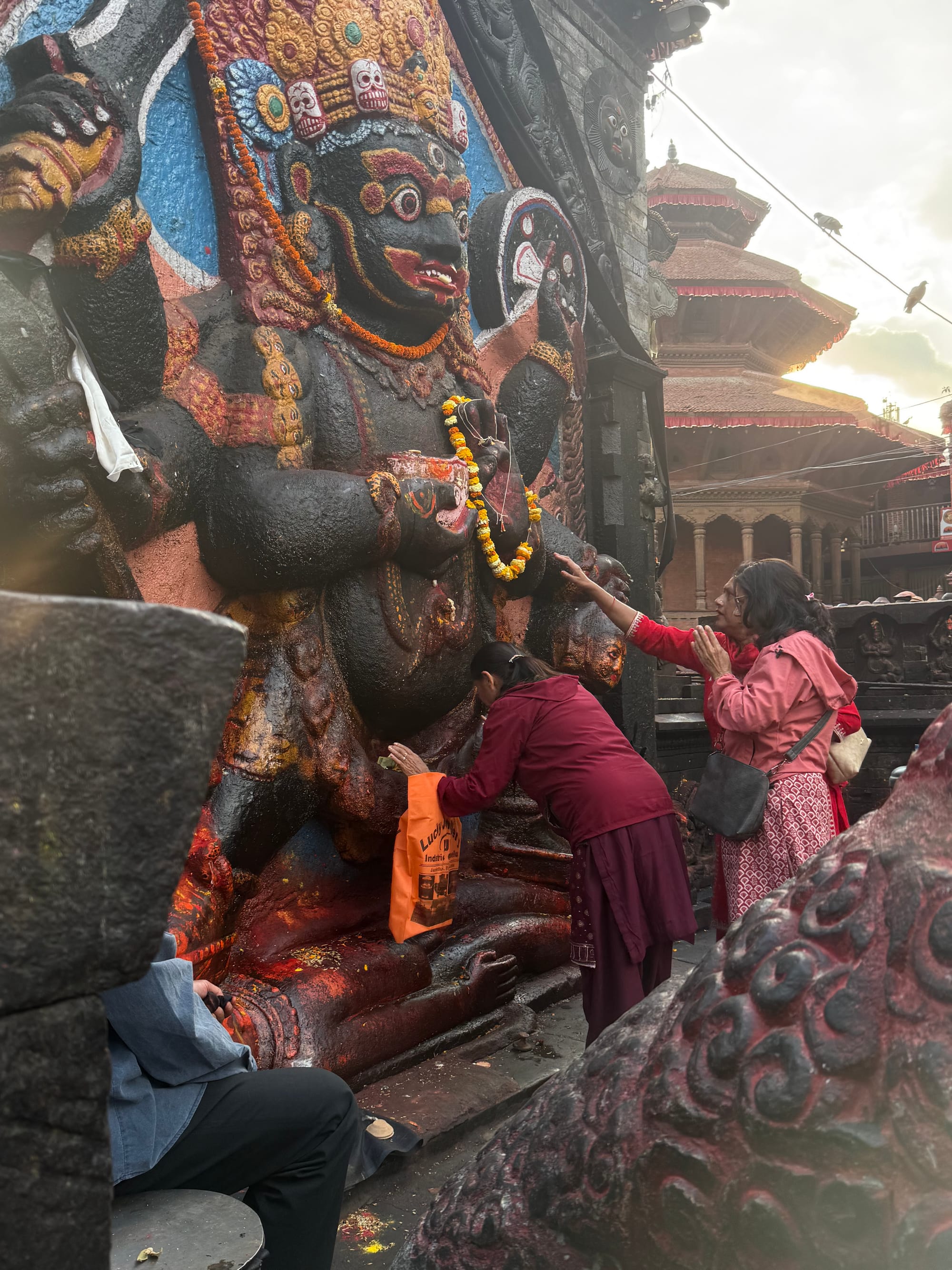
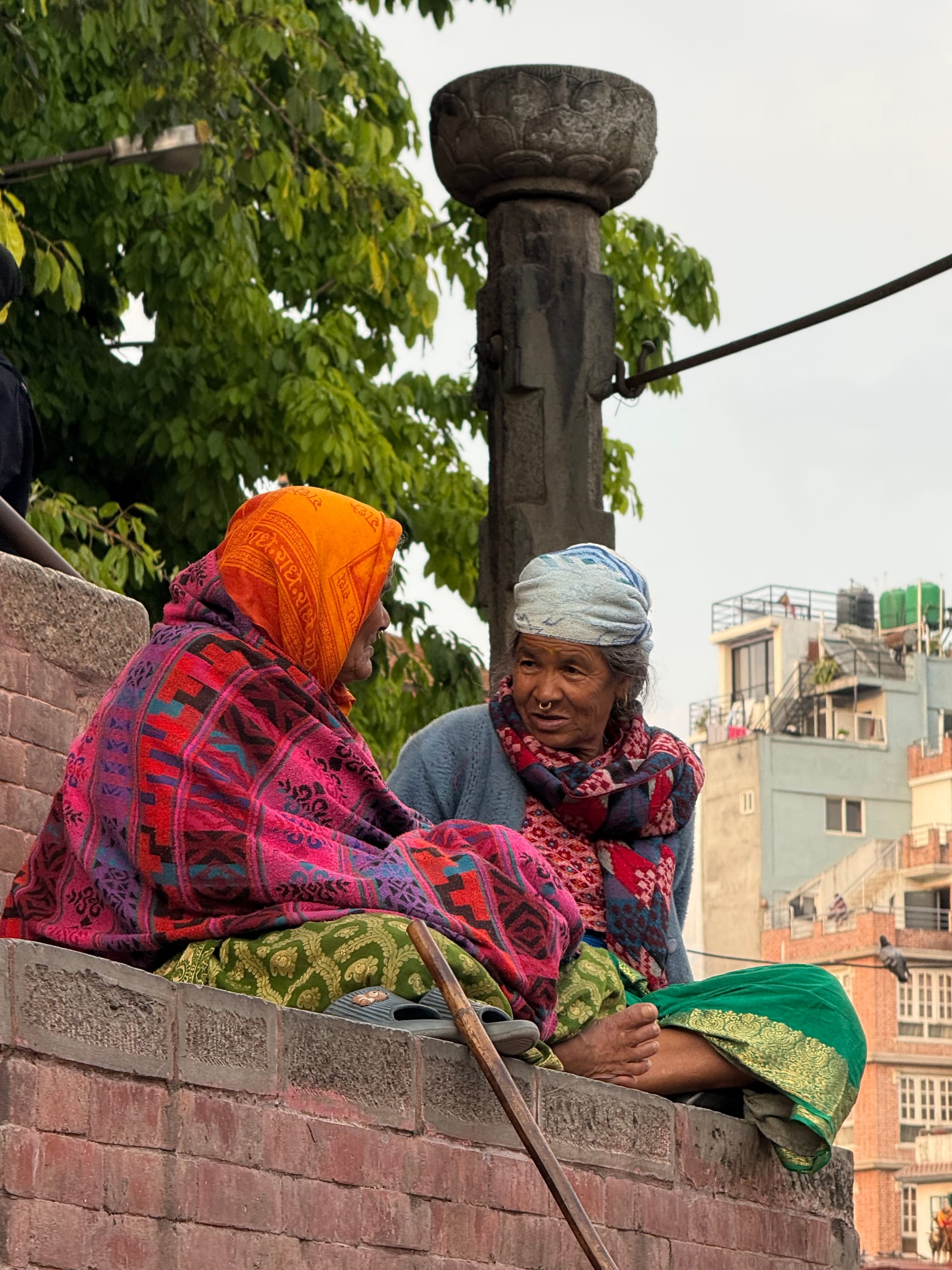
Around me, the city moved—motorcycles weaving through pedestrians, no clear boundary between them. It required a kind of continuous, responsive attention.
What stayed with me most was the contrast:
One conversation that opened into something real.
Another that remained bound to a role.
Both human.
Both understandable.
And somewhere in between, a quiet question:
Where does genuine meeting happen—and what gets in the way?