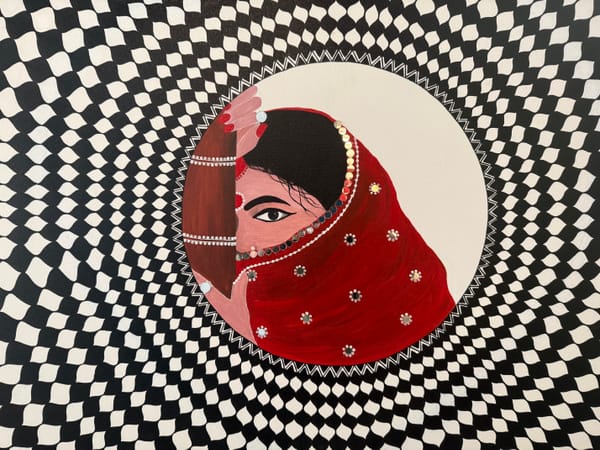
Art Reflects the Nation’s Mood
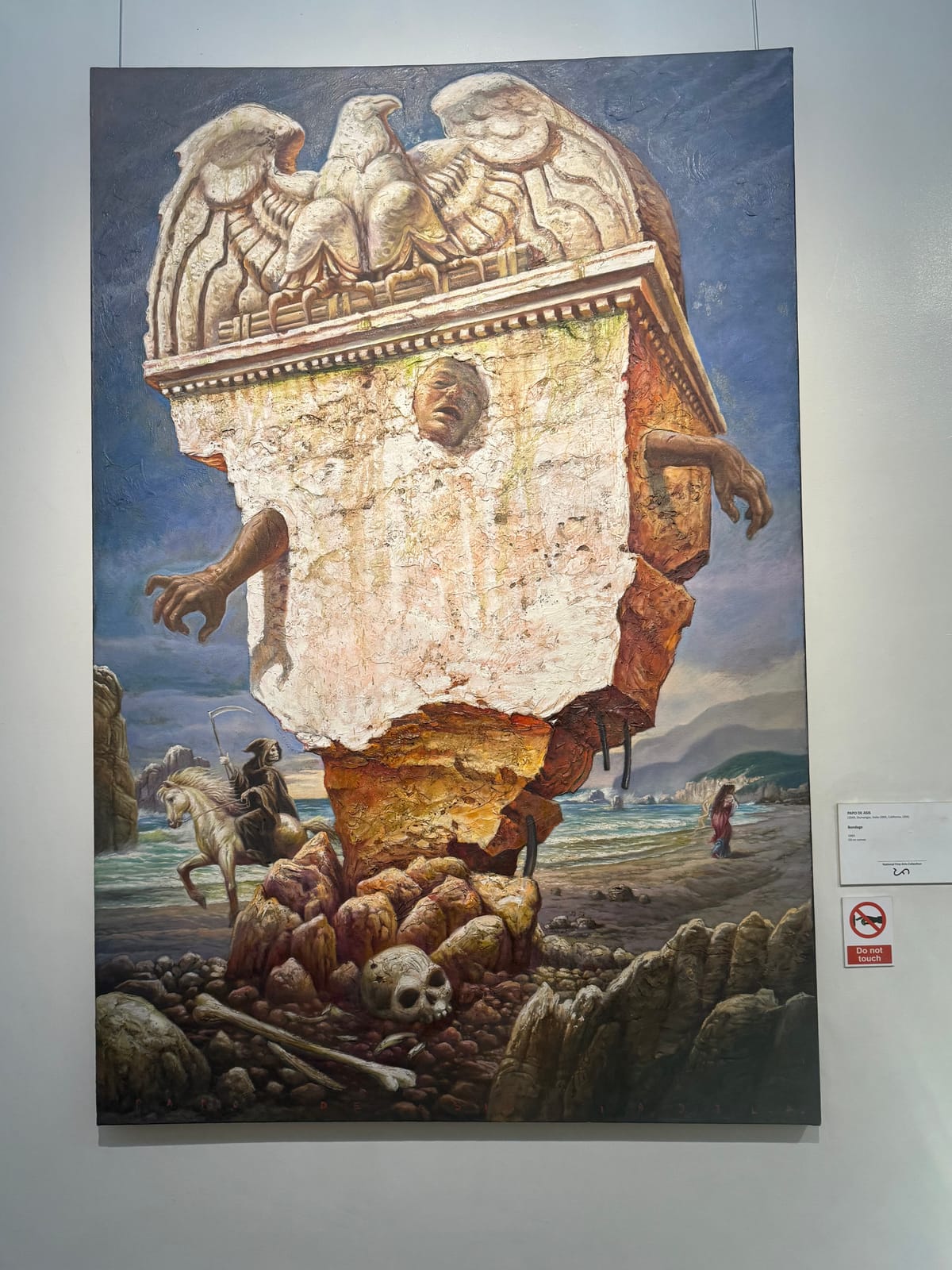
I share this as a naïve observer, moved by a feeling that arose in the moment. It is not an objective assessment. Earlier in the day I had stood at the site of José Rizal’s execution, and that experience was still with me.
That mood carried into our visit to the National Museum of Art. The collection includes extraordinary work by some of the Philippines’ most accomplished artists. The talent on display is undeniable. Several pieces are truly outstanding.
Yet taken together, I felt an atmosphere of tension and lingering despondency. Many of the religious works centered on martyrdom. Only a few conveyed reverence or inspiration aligned with the glory of God. I am not referring to depictions of Christ’s crucifixion, but to scenes of self-immolation and torture. Much of this work was anonymous.
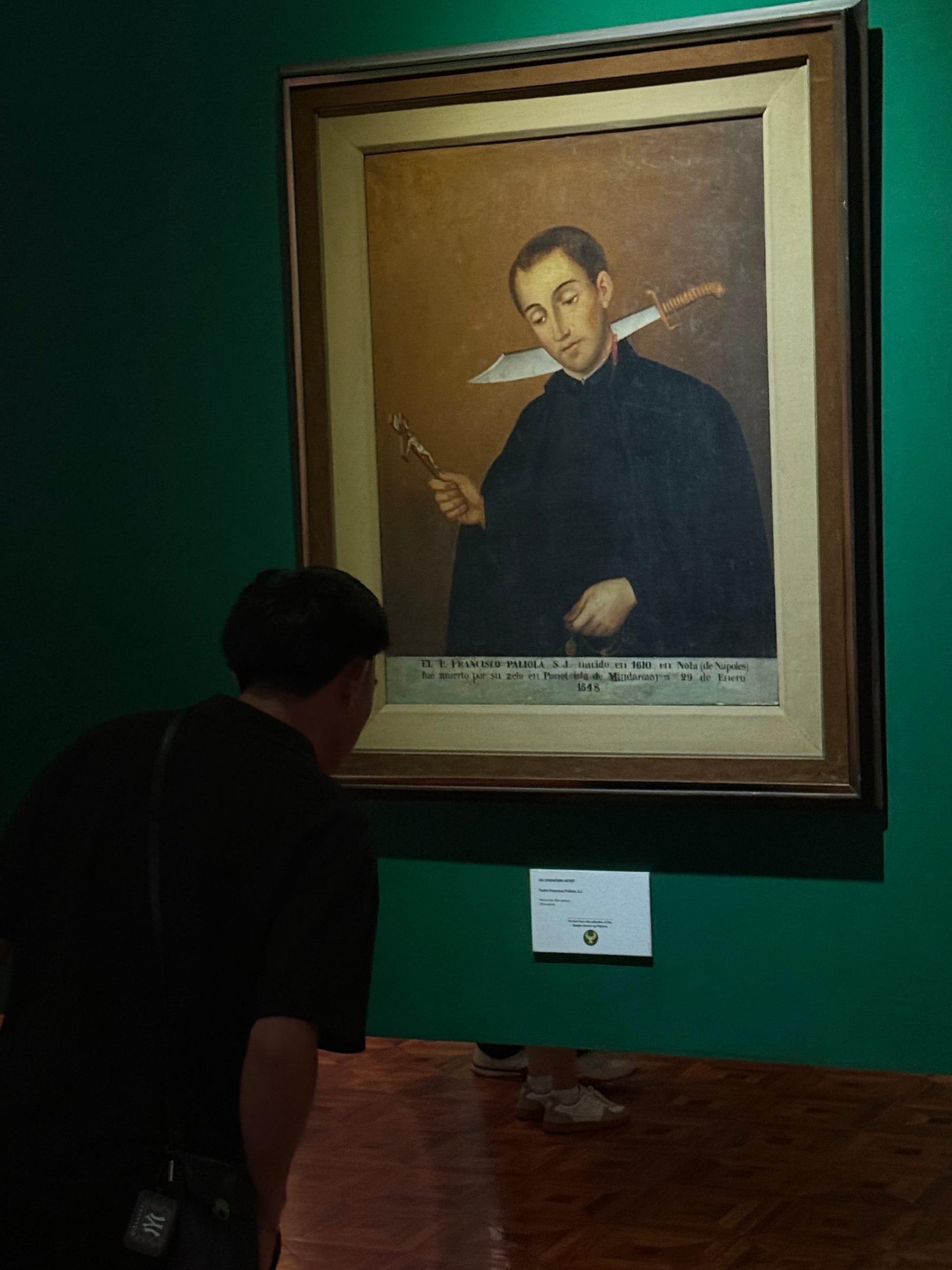
I am not an art critic, nor especially versed in religious art. What struck me was the curatorial weight of what was chosen. It left me feeling subdued — or perhaps it amplified what was already stirred in me from reflecting on Rizal.
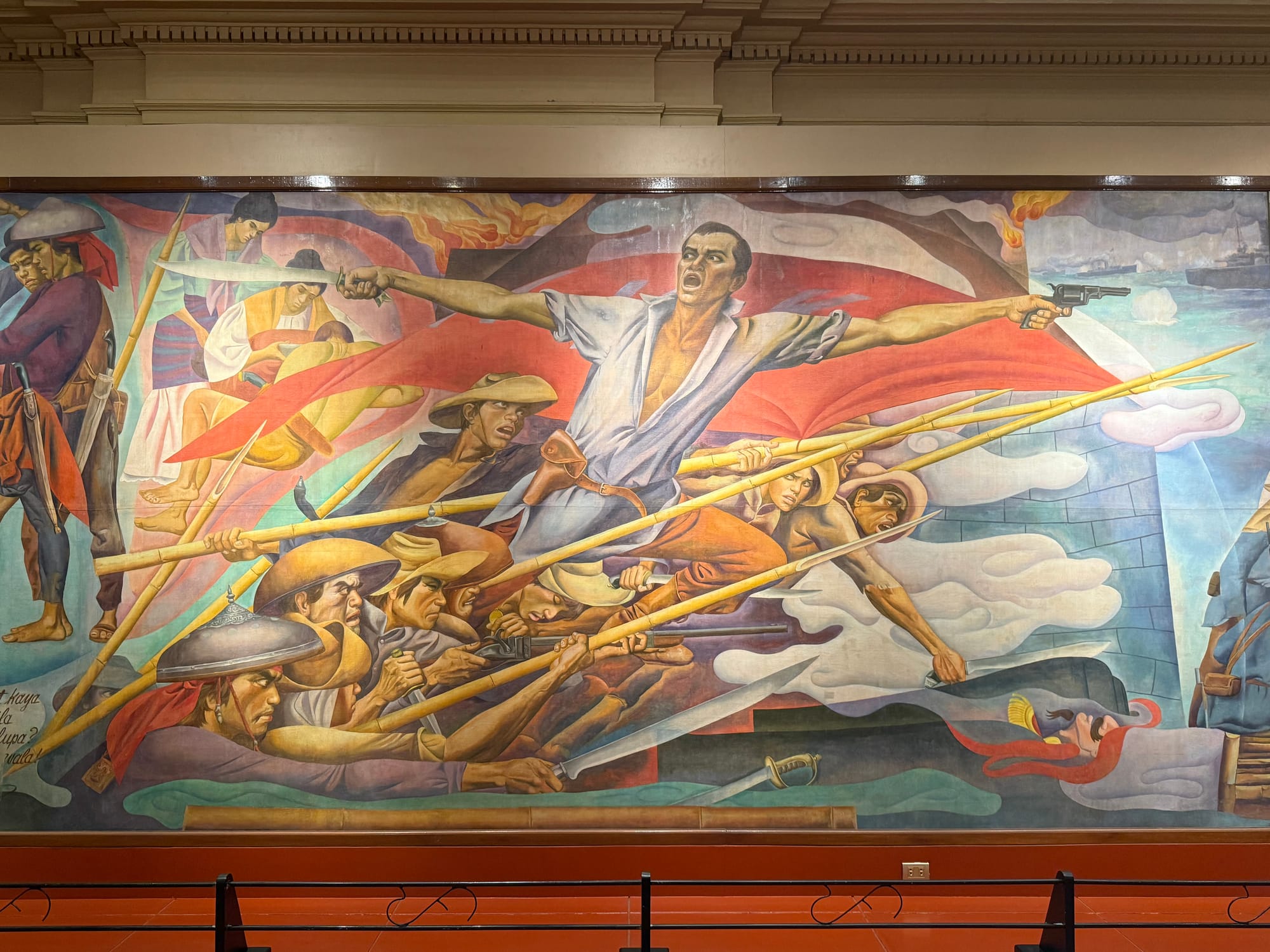
This feeling extended into the contemporary galleries. One large mural portrayed the historical struggles of the Filipino people and their triumph over Spanish rule. Yet even in victory, the faces seemed marked by anguish. For me, it conveyed less the joy of liberation and more another chapter in an ongoing story of struggle.
And indeed, struggle continues. I sensed an undercurrent — a pressure to free oneself from long histories of servitude and abuse. Not desperation exactly, but a deeply conditioned orientation that may be difficult to shake, reappearing in new forms over time.
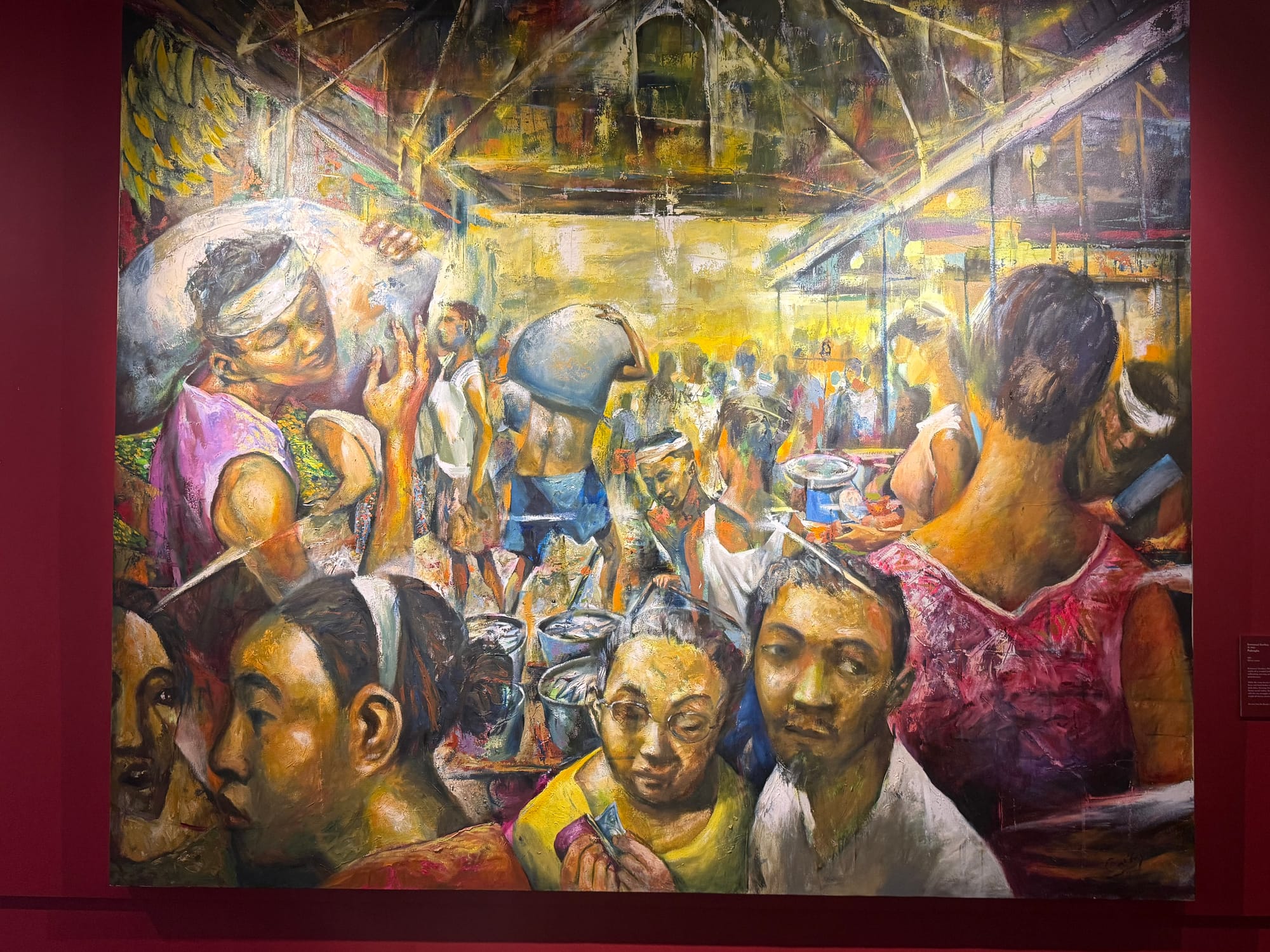
This sensibility was captured powerfully in Emmanuel Garibay’s painting “Palengke.” A description of the work reads:
“Emmanuel Garibay’s Palengke captures the harsh reality of a crowded public market — hot, suffocating, starving, and marked by hunger and powerlessness. While the scene bursts with color, the somber faces and tired bodies reveal the deep toll of daily labor. Drawing from his experience as a former social worker, Garibay confronts the viewer with the raw struggles of society — exposing the weight of money, power, and cruelty.”
That tone felt pervasive throughout much of the museum. I recognize that I was filtering what I saw through the lens of my earlier reflections. Still, I left feeling disheartened.
Social injustice exists everywhere. Yet here it felt concentrated, almost cumulative — as if centuries of occupation and hardship had settled into the collective psyche. Perhaps this is too broad a conclusion. Most people are simply living their lives, tending to what is in front of them — food on the table, a roof overhead, the daily contingencies of survival.
Still, the question arose for me: how does a society lift itself from such heaviness?
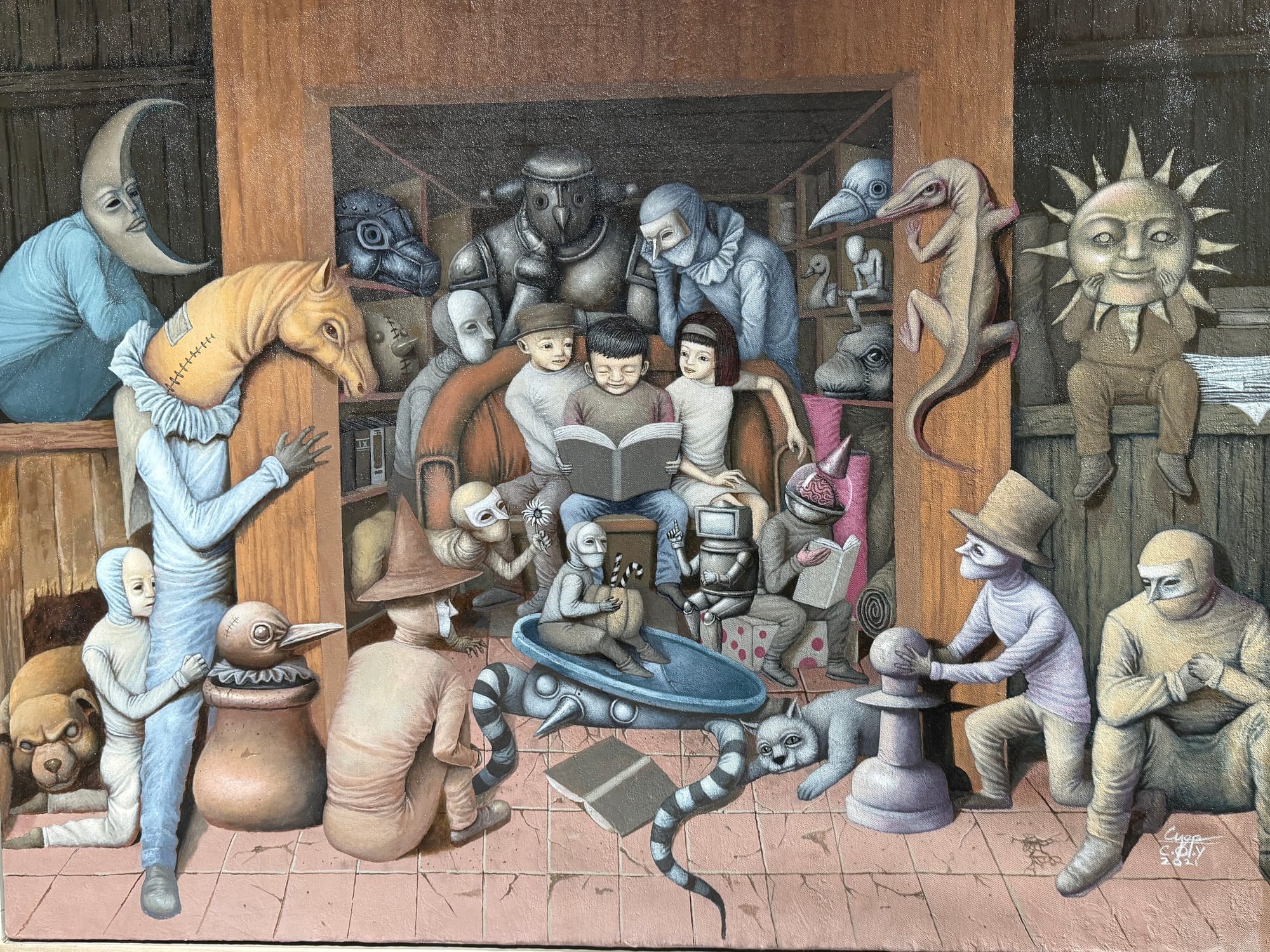
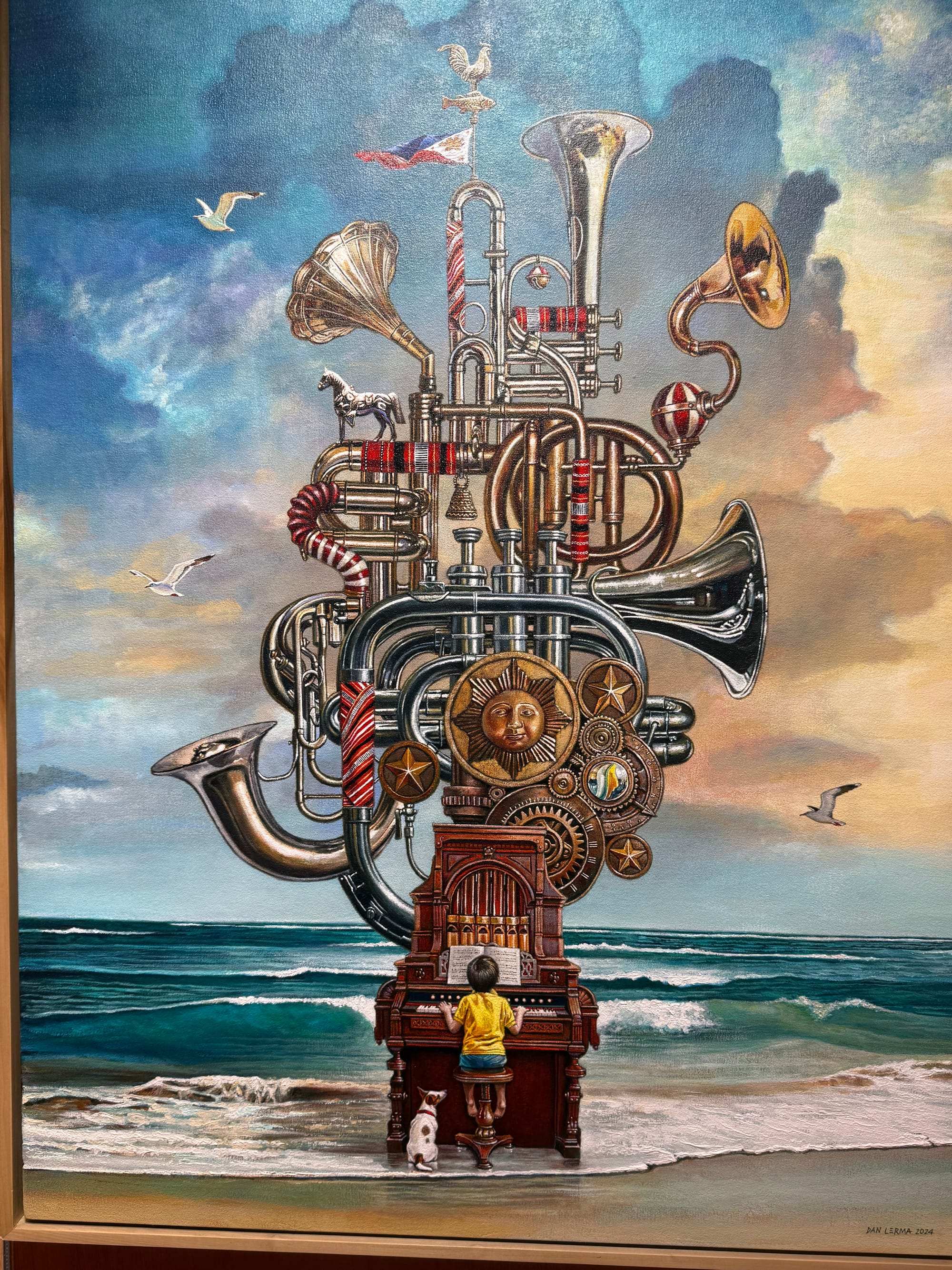
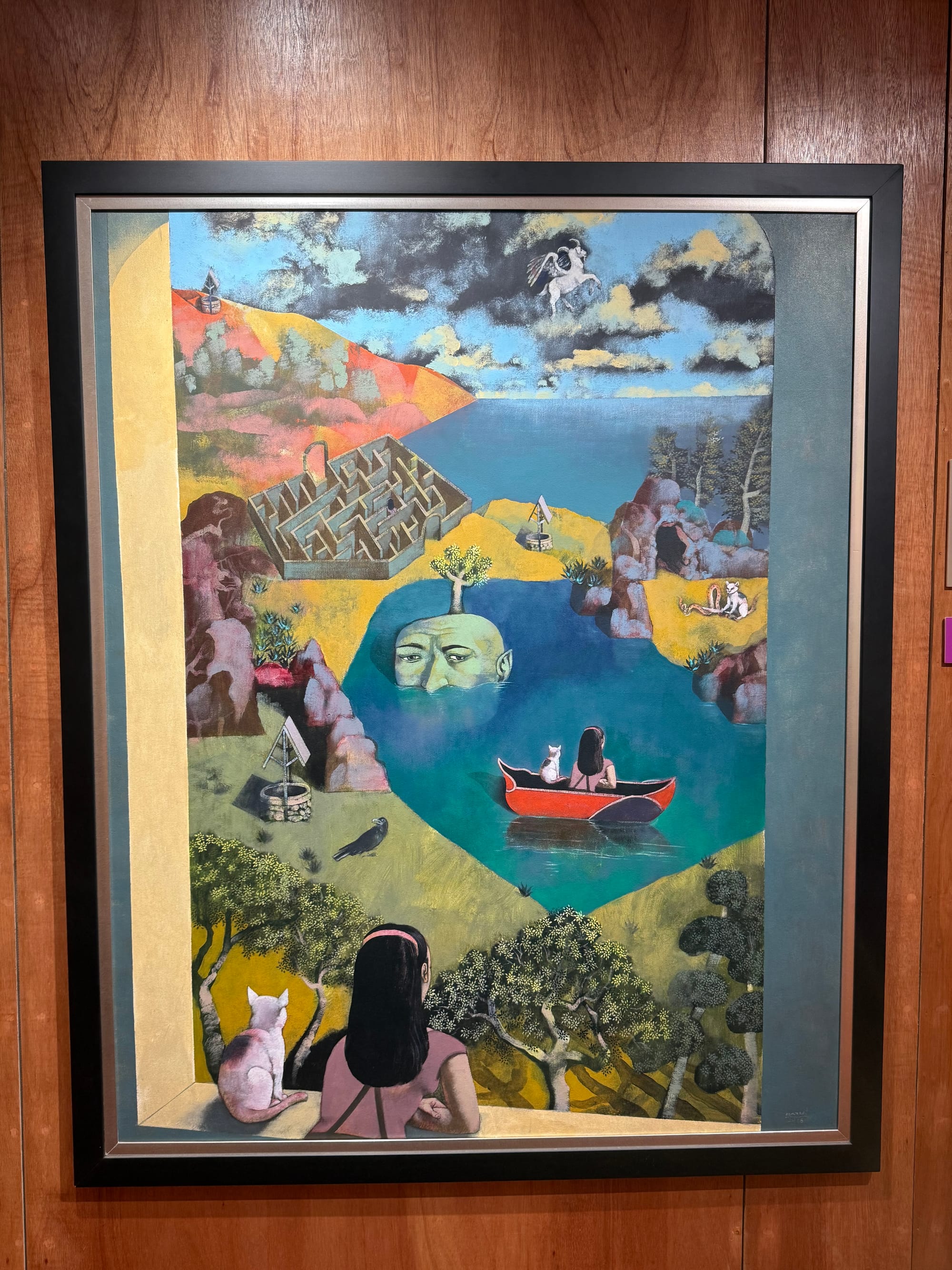
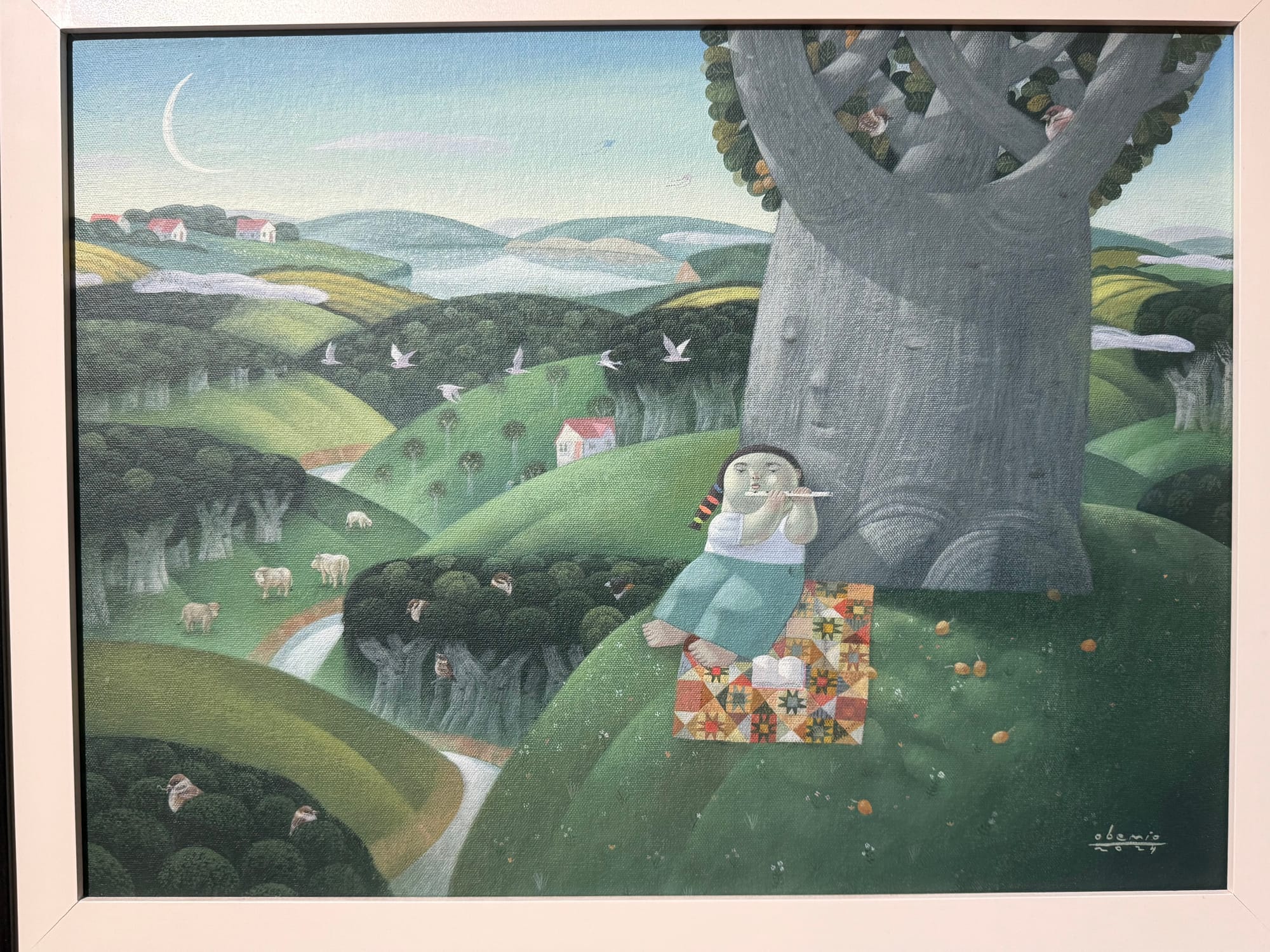
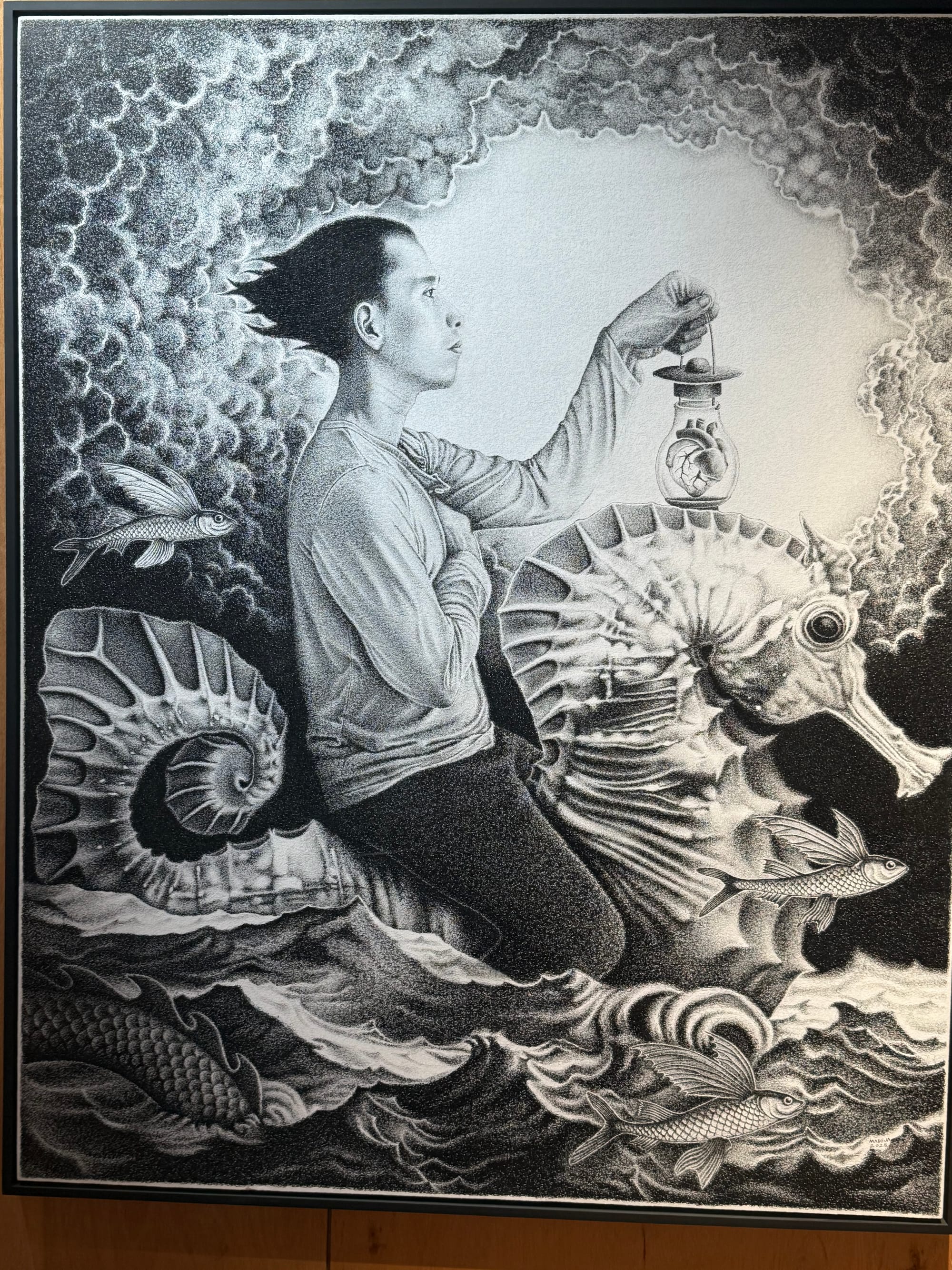
There was one unexpected opening. A special exhibition featured children’s books and illustrations. Several works radiated wonder, exploration, and delight. In them I felt a different current — the enduring spark of curiosity and imagination that lives beneath conditioning.
That felt like hope.
The possibility that something essential and alive remains within us — always available — even after long histories of struggle.
Below are a few of the works that stirred that feeling in me.