José Rizal-Hero of the Philippines
Yesterday was my first full day in Manila, and Henree was on a mission: to introduce me to the soul of her homeland.
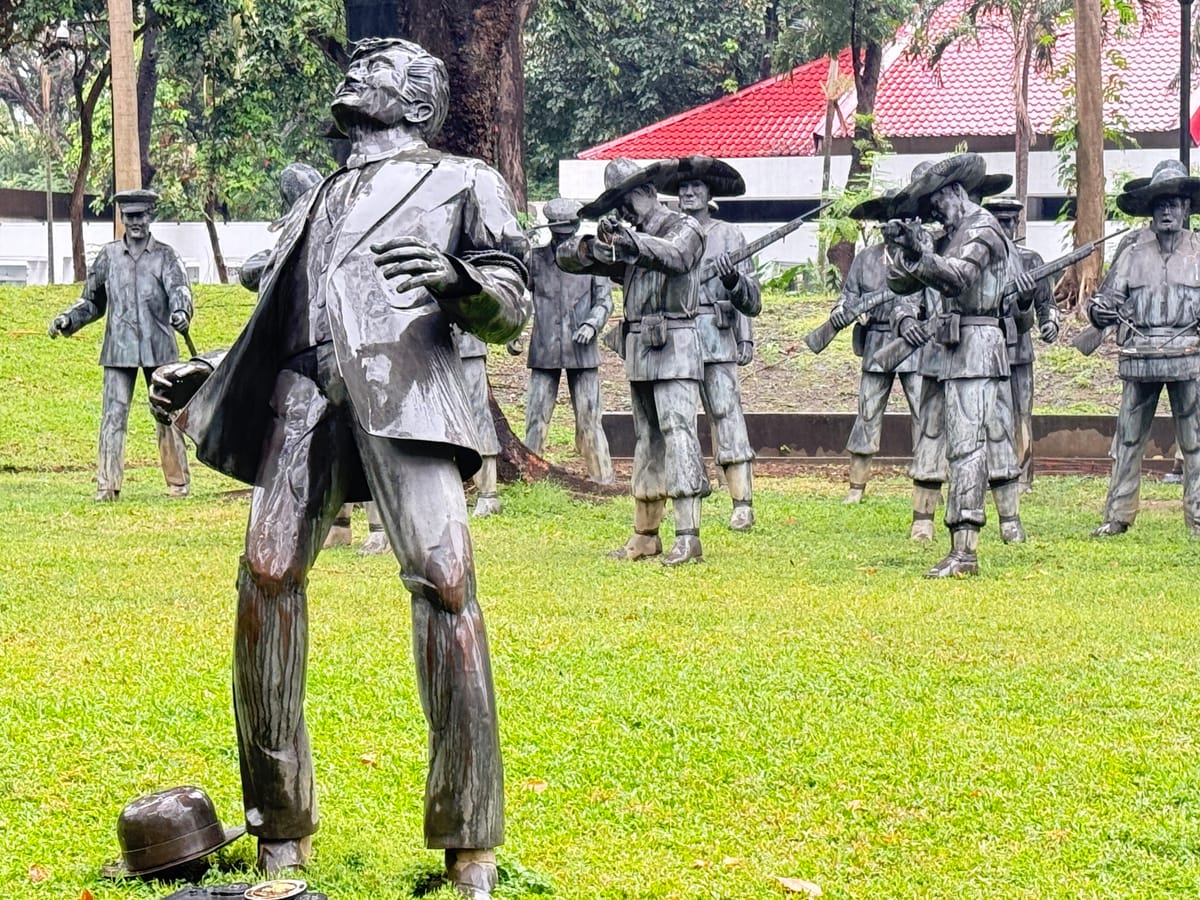
We began at Rizal Park, standing before the memorial to José Rizal — often called the Philippines’ most revered hero. The sculpture, created by the Filipino artist Eduardo Castrillo, captures the gravity of his final moments.
Rizal was a true Renaissance figure — novelist, poet, physician, scientist, linguist, reformer. He wielded words rather than weapons. After more than 350 years of Spanish colonial rule, his writings stirred a people to remember their own worth. For that, he was deemed dangerous.
The Spanish authorities staged a military trial and sentenced him to death. He was executed by firing squad in 1896 on that very ground.
As I stood there I felt that this man had touched the hearts of his people who had suffered such a protracted period of servitude. I later found out, after visiting Santiago Fort, how profound his impact was. Reading his words, examining his creative range, and his deep caring for healing, I felt a love for this man. Rizal did not call for violent revolution; he called for dignity, education, awakening. Even before I knew this about him I was sensing this about him.
And as if by design, it began to rain down on us bringing home to me a feeling of grief for what was lost. And yet, his pen had sparked the beginning of a movement to overthrow the Spaniards.
His martyrdom ignited what his pen had already begun.
Freedom movements often begin not with force, but with a shift in thought — a reclaiming of inner authority. Rizal seemed to understand this deeply.
Manila did not welcome me in gently. It introduced itself through sacrifice, history, and awakening.
And this history alerted me to an abiding feeling of oppressiveness still in play in the consciousness of the Filipino people.
More on this in my next post.